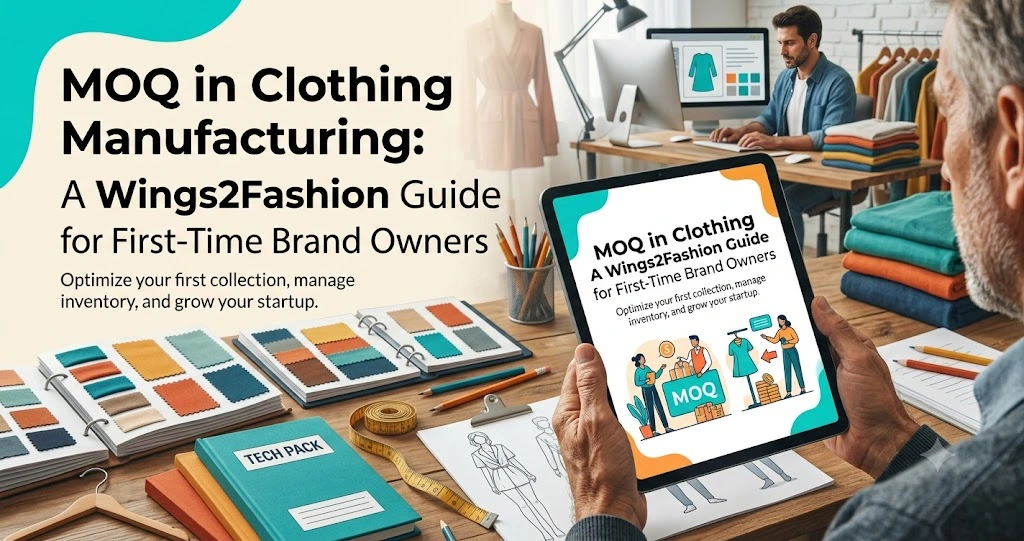
MOQ in Clothing Manufacturing: A Wings2Fashion Guide for First-Time Brand Owners
Why MOQ in Clothing Manufacturing Is the First Number That Matters
Before fabric, before fit, before branding, every first-time founder runs into the same number: MOQ. The minimum order quantity clothing manufacturers require determines how much capital gets tied up in inventory before a single sale happens, and getting that number wrong is one of the more expensive mistakes a new brand can make.
The risk is not theoretical. A peer-reviewed study on fast fashion overstock found that 44 percent of fashion retailers report excess stock, with unsold merchandise accounting for roughly 17 to 20 percent of total inventory, and cites the Ellen MacArthur Foundation's estimate that disposed unsold fashion inventory carries an annual value of 500 billion dollars industry-wide. On the other side of the ledger, NBER research on financing constraints confirms that access to capital is one of the most consistent limits on early-stage entrepreneurship, which means capital tied up in an oversized first order is capital that cannot go toward marketing, reorders, or simply staying in business.
This guide explains what MOQ in clothing manufacturing actually covers, why manufacturers set it where they do, and how Wings2Fashion structures MOQ for founders placing their first order. The goal is not to find the lowest possible number. It is to find the number that matches your actual sell-through, your cash position, and the fabric you have chosen, so the first production run builds momentum instead of tying up capital you need for everything that comes after it.
What MOQ in Clothing Manufacturing Actually Means
MOQ, or minimum order quantity, is the smallest quantity a manufacturer will produce in a single run. Below that number, the manufacturer's fixed costs, fabric cutting, pattern setup, machine changeover, and labor do not spread thinly enough to make the order profitable for the factory to accept.
A study in the Journal of Fashion Marketing and Management examining small-series production in the EU textile and apparel industry found that high minimum order quantities remain one of the central barriers facing brands that want smaller, more flexible production runs, particularly with functional or technical fabrics. MOQ in clothing manufacturing is not an arbitrary gatekeeping number. It reflects the real fixed cost structure behind every production run.
Per Style MOQ vs Per Color MOQ vs Fabric Roll Minimums
MOQ in clothing manufacturing is rarely a single number. It usually applies at three different levels, and confusing them is where most first-time founders miscalculate their budget.
Per Style MOQ
This is the minimum quantity across all sizes and colors for one design. A manufacturer quoting 50 pieces per style typically means 50 total units, split across your size run, not 50 units of each size.
Per Color MOQ
Some manufacturers set a separate minimum for each colorway within a style. A style available in three colors might carry the per style MOQ three times over if each colorway triggers its own cutting and dyeing run.
Fabric Roll Minimums
Fabric mills sell in roll increments, and a mill's minimum roll purchase can end up being the real ceiling on your order, independent of what the garment factory quotes. A factory MOQ of 50 pieces per style does not help if the fabric you want only comes in rolls sized for 300 units.
Sample Order vs Bulk Production Quantity
A sample order, typically one to a few pieces, is separate from the MOQ and exists to confirm fit and construction before committing to the bulk production quantity. Confusing a sample order with your MOQ leads founders to underestimate how much capital the first real production run will require.
The Real Cost of Choosing the Wrong MOQ
Ordering above what you can realistically sell in a season creates the same overstock risk that the fast fashion overstock study documents at the industry level, just at a smaller and more financially dangerous scale for a founder with limited capital. Academic operations research on cash-constrained inventory ordering models exactly this problem: a business with limited working capital that orders beyond its cash position risks a shortfall on the next reorder, even when the oversized order eventually sells through.
Ordering below what a manufacturer needs to run efficiently carries the opposite risk. A quantity too small to hit the factory's real MOQ either gets rejected outright or gets quoted at a per-unit price that erases the margin the brand needs to survive its first season.
The right MOQ sits at the intersection of what a founder can afford to have sitting in inventory and what a factory needs to make the run worth running.
A Founder's MOQ Math: A Worked Example
Consider a founder launching a hoodie line with a 50-piece per style MOQ, split across three colorways. If each colorway triggers its own per-color MOQ, the real order is not 50 units. It is 150, since each colorway needs to hit the minimum independently. At an average landed cost of 18 dollars per unit, that first order requires 2,700 dollars in production cost alone, before packaging, shipping, or marketing.
Now suppose the founder had assumed the 50-piece MOQ in clothing manufacturing applied across all three colorways combined. The budget planned for 900 dollars would fall 1,800 dollars short the moment the manufacturer clarifies that each colorway carries its own minimum. This is exactly the kind of miscalculation that turns a manageable first order into a cash flow crisis, and it is avoidable simply by asking whether MOQ in clothing manufacturing applies per style, per color, or as a combined total before signing off on a quote.
The same math runs in reverse with fabric roll minimums. If the requested fabric only ships in rolls sized for 200 meters, and each unit needs half a meter, the fabric minimum alone supports 400 units, well above the garment factory's 50-piece MOQ. In that case, the fabric roll minimum, not the factory's stated MOQ, becomes the real constraint on the smallest order a founder can place.
How to Calculate the Right MOQ for Your First Order
Before agreeing to any manufacturer's stated MOQ, a founder should work through:
- Realistic sell-through for a first season, based on comparable brands or pre-orders, not aspirational projections
- Cash available to hold as inventory without straining other startup costs
- Whether the MOQ quoted is per style, per color, or a combined figure across a small size range
- Fabric roll minimums for the specific fabric requested, checked separately from the garment factory's MOQ
- Whether the manufacturer allows mixed sizing within the MOQ, rather than requiring the full minimum in one size
Not sure how your numbers stack up against a real quote? Contact Wings2Fashion with your target sell-through and budget, and the team will map out an MOQ that fits your first order rather than the factory's convenience.
Low MOQ Manufacturer Options: What to Look For
A low MOQ manufacturer is not automatically the right choice just because the number is small. Founders evaluating a low MOQ manufacturer should check whether the low minimum applies per style or requires hitting it separately per color, whether fabric options are limited to what the manufacturer already stocks, and whether per-unit pricing at the low MOQ still leaves a workable margin. A low MOQ manufacturer that only offers its lowest minimum on fabrics already sitting in stock is a very different proposition from one that will source a specific fabric to a low minimum on request, and the difference rarely shows up until a founder asks directly.
It also helps to ask a low MOQ manufacturer how MOQ changes as a brand grows. Some manufacturers keep the same low MOQ regardless of order history, while others lower the minimum further, or improve per-unit pricing at the existing minimum, once a founder has placed two or three repeat orders. Knowing this in advance helps a founder plan not just the first order but the production relationship over a brand's first year.
At Wings2Fashion, MOQ starts at 50 pieces per style with mixed sizes, which keeps the programme accessible for a first order without forcing a founder into a single size run to hit the minimum. This applies across private label manufacturing and custom cut and sew production alike, with the specific minimum varying by fabric and construction complexity.
How Wings2Fashion Structures MOQ for First-Time Brand Owners
Wings2Fashion sets MOQ at the style level with mixed sizing built in, so a first order does not force a founder to commit the full minimum to one size. Fabric roll minimums are checked against the requested fabric before a quote is confirmed, so a founder is not quoted a factory MOQ that turns out to be unworkable once the fabric minimum is factored in.
For founders testing multiple colorways in a first collection, the team clarifies upfront whether a colorway change triggers a new per-color MOQ or fits within the existing per-style minimum, so budgeting happens before production, not after a surprise invoice. This same clarity extends to repeat orders, where founders who have completed a first production run typically see either a lower effective MOQ or improved per-unit pricing at the existing minimum, depending on the category and fabric involved.
FAQ's About MOQ in Clothing Manufacturing
What is a typical MOQ in clothing manufacturing for a first-time brand?
Minimums vary widely by manufacturer and fabric, but many manufacturers working with startups quote somewhere between 50 and 300 pieces per style. A low MOQ manufacturer serving first-time brands often starts around 50 pieces per style with mixed sizing.
Does MOQ in clothing manufacturing apply per size or across all sizes combined?
This depends on the manufacturer. Ask directly whether the quoted MOQ is a total across your size run or a minimum required per individual size, since the difference changes your real order size significantly.
Can I negotiate a lower MOQ with a manufacturer?
Sometimes, particularly for a first order intended to lead to repeat business, or by choosing a fabric the manufacturer already stocks in smaller roll quantities. A low MOQ manufacturer is often more willing to negotiate on a first order than a factory whose standard MOQ is already set at the fabric mill level.
Is a sample order counted toward my MOQ?
No. A sample order exists to confirm fit and construction before bulk production quantity is committed, and is separate from the minimum order quantity clothing manufacturers require for the actual production run.
What happens if my fabric roll minimum is higher than the factory's MOQ?
The fabric roll minimum becomes the real constraint on your order size, regardless of what the garment factory quotes. Always confirm fabric roll minimums for your specific fabric choice before finalizing a quantity based on the factory's stated MOQ alone.
Getting MOQ Right Before You Commit to a First Order
MOQ in clothing manufacturing is not a single fixed number to accept or reject. It is a combination of per-style minimums, per-color minimums, and fabric roll minimums that together determine how much capital your first order actually requires. Founders who map these numbers against realistic sell-through, rather than against the factory's stated minimum alone, avoid both the overstock risk documented across the industry and the working capital strain that undersized planning creates.
Ready to confirm what your first order will actually cost? Get in touch with Wings2Fashion with your design and target quantity, and the team will confirm per style, per color, and fabric roll minimums before you commit to a production run.
 +919540322227
 info@wings2fashion.com



 Category


 Best Clothing Manufacturers for Startups USA
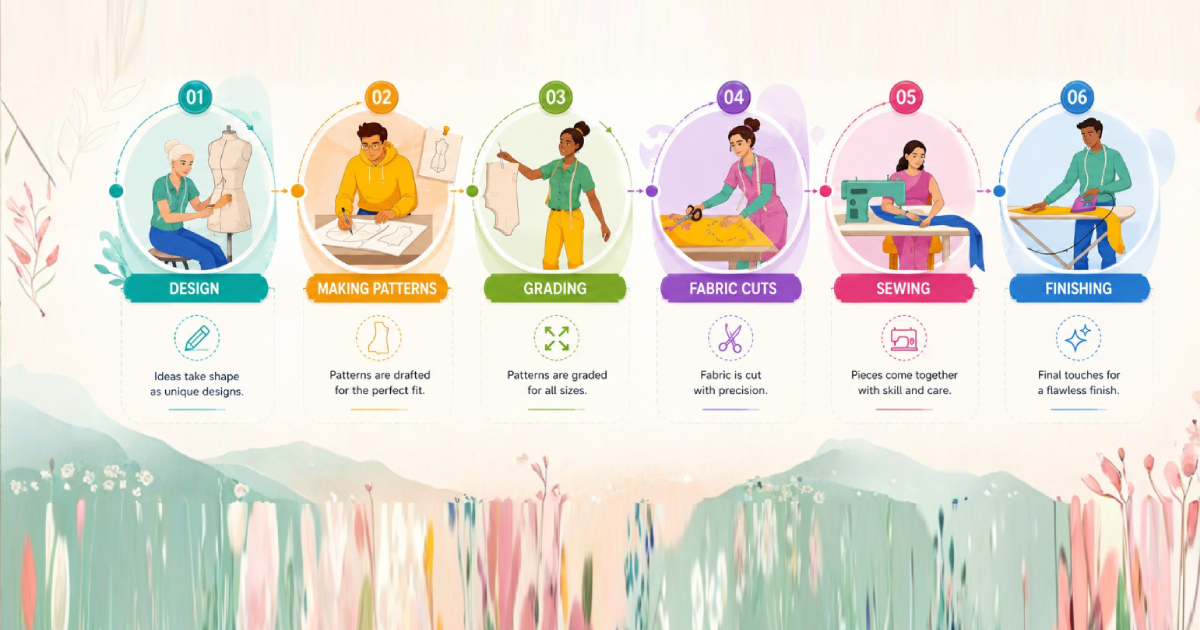 Step-by-Step Garment Manufacturing Process
 Custom Streetwear Manufacturer for Global Brands
 How Much Does It Cost to Start a Clothing Brand?
 Best Garment Manufacturer Australian Brands
 Custom Clothing Production for European Fashion Brands
 Sustainable Hoodie Manufacturer for Startups
 Top 25 Women's Western Wear Trends
 How to Verify a Clothing Manufacturer Before You Pay a Deposit
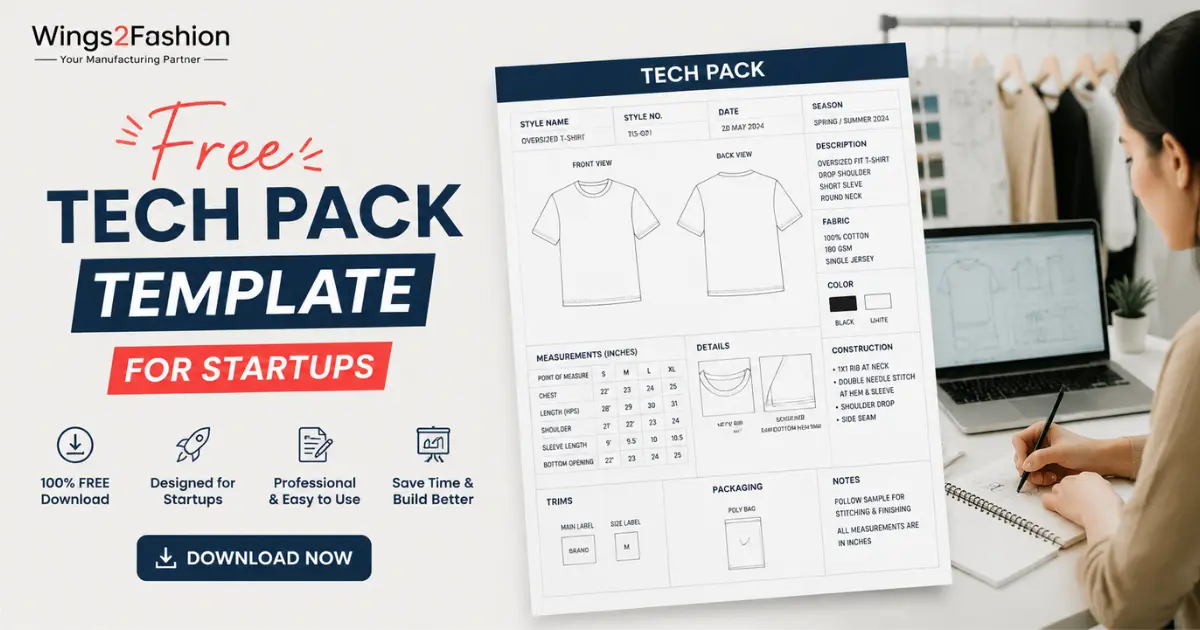 Free Tech Pack Template for Startups
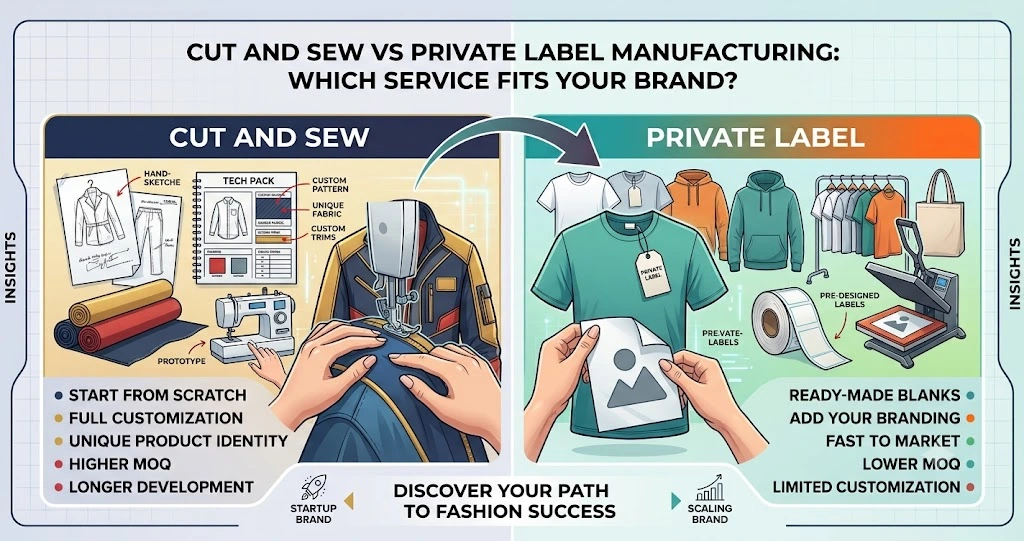 Cut and Sew vs Private Label Manufacturing
 India vs China Clothing Manufacturing
 Custom Clothing Manufacturer for UK Brands
 Plus Size Clothing Manufacturing
 Athleisure Manufacturing Trends
 Best Trending Styles Polo T-Shirts for Men
 Top 10 Custom Tracksuit Manufacturers With Low MOQ
 2026-09-12
 Suraj Vats





Leave A Comment