India vs China Clothing Manufacturing: Why Startups Choose Wings2Fashion in 2026
India vs China Clothing Manufacturing: The Real Starting Point for a Sourcing Decision
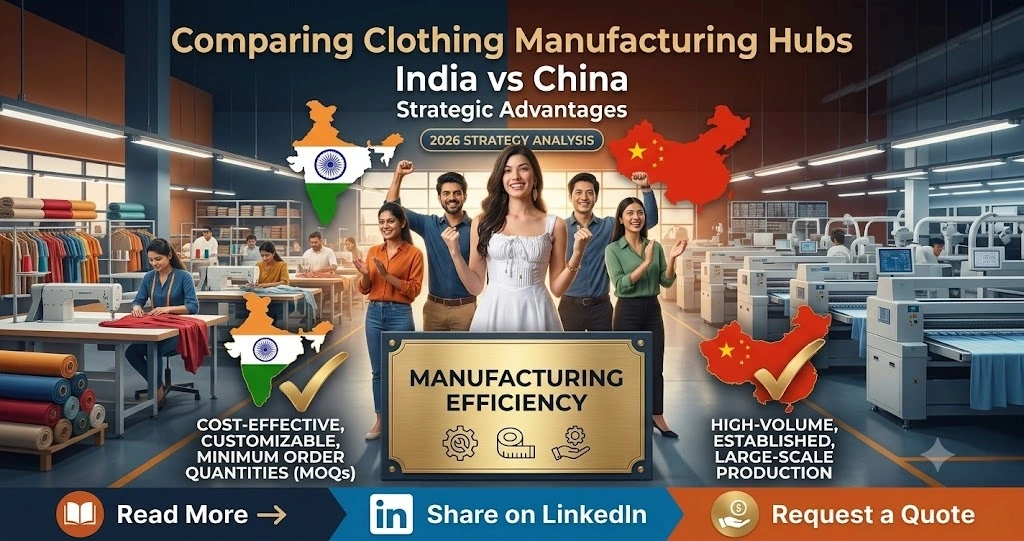
Every founder sourcing a first production run eventually runs the India vs China clothing manufacturing comparison, usually after a supplier directory search returns hundreds of factories in both countries and no clear way to choose between them. The honest answer is that neither country wins outright. Each wins on different variables, and which variables matter most depends on what a founder is producing and for which market.
An official USITC report on apparel export competitiveness found that India's apparel production is supported by a highly vertically integrated industry, with quality and detailed finishing contributing directly to its competitiveness as a sourcing destination. On the labor side, ILO data on the Asian garment sector puts China's garment, textile, and footwear workforce and India's at roughly 14 to 15 million workers each, though the two economies deploy that workforce very differently across the value chain.
This guide explains how India vs China clothing manufacturing actually breaks down across cost, vertical integration, sampling turnaround, and export compliance, and why that comparison is leading more startups to Wings2Fashion in 2026.
Cost: What "Cheaper" Actually Means in a Landed Cost Comparison
A landed cost comparison between India and China rarely comes down to a single per-unit number. Labor cost is only one input, and it is not always the deciding one. The same USITC research notes that low labor costs alone do not reflect the true cost of doing business in a country, since factors like wage suppression, productivity, and reliability all factor into what a brand actually pays once a full production run is delivered.
A clothing manufacturer India cost estimate has to account for fabric sourcing, since India's textile industry supplies much of its own raw material domestically, while a China garment factory comparison often involves a supply chain that spans multiple countries for fiber, yarn, and finished fabric. Once shipping, duties, and quality-related rework are added to the base unit price, a landed cost comparison frequently narrows the gap that a factory's quoted price alone would suggest.
Consider a founder comparing two quotes for the same hoodie style: an Indian factory quoting 6.50 dollars per unit and a Chinese factory quoting 5.80 dollars per unit. On the quoted price alone, China looks cheaper. Once freight, the applicable duty rate, and a realistic allowance for a second sample round are added, the landed cost comparison can shift meaningfully, particularly if the Indian factory sources its fleece fabric domestically and the Chinese factory imports a component from a third country, adding its own freight and lead time. A quoted per-unit price is the start of a landed cost comparison, not the end of one.
Vertical Integration: Why India Is Often Called a Fabric Sourcing Hub
India is frequently described as a fabric sourcing hub because its textile supply chain- spinning, weaving, dyeing, and garment construction- sits largely within its own borders. Research tracking global apparel and textile trade by origin of value added, drawing on OECD trade data, found that India's apparel exports contain only about 21 percent foreign value added, compared with 44 percent for Vietnam, meaning a much larger share of an Indian-made garment's raw materials and processing happens domestically rather than being imported from elsewhere.
This matters for a sourcing decision beyond patriotism or supply chain optics. A fabric sourcing hub with most of its textile production onshore is less exposed to a second country's shipping delays, currency shifts, or export restrictions disrupting fabric delivery mid-production. China remains the world's largest textile exporter in absolute terms, but a growing share of that output now goes into other countries' garment factories rather than China's own cut-and-sew lines, a shift that changes what "sourcing from China" actually means for a founder placing an order today.
Sampling Turnaround and Communication
Sampling turnaround is where founders often notice the practical difference between India vs China clothing manufacturing fastest. Communication in English, working hours that overlap more closely with US and European business hours, and a manufacturing base used to working directly with smaller international brands all affect how quickly a founder gets from a design brief to an approved sample.
Neither country holds a universal advantage here. Sampling turnaround depends heavily on the specific factory, the garment category, and how complete the tech pack or design brief is at the outset, more than on the country itself. A well-documented brief sent to a responsive factory in either country will outperform a vague brief sent to a slower one, regardless of geography.
Time zone overlap plays a practical role too. A founder in the United States or Europe corresponding with a factory typically gets same-day responses more consistently when working hours overlap, which affects how many rounds a sampling turnaround takes to reach approval, independent of the factory's actual production speed. A factory that responds to a fit note within hours rather than a full day compresses sampling turnaround meaningfully over a two- or three-round approval process, even if the physical sample-making time is identical.
Export Compliance and Trade Terms
Export compliance has become one of the more volatile variables in any India vs China clothing manufacturing decision, largely because of shifting tariff policy rather than anything intrinsic to either country's manufacturing capability. Trade reporting on the current tariff environment shows India's reciprocal US tariff rate moving from an initial 26 to 27 percent in April 2025 to a combined rate as high as 50 percent by August 2025 after an additional penalty was applied, a sharp contrast with the far higher rates applied to Chinese-origin goods over the same period.
Export compliance requirements, documentation, country-of-origin rules, and applicable duty rates change often enough that a founder should confirm current terms directly with a manufacturer or customs broker before finalizing a sourcing decision, rather than relying on a comparison that may be several months out of date by the time an order ships.
China Garment Factory Comparison: Where China Still Wins
A fair China garment factory comparison has to acknowledge where China's scale genuinely outperforms India. A peer-reviewed study in the VILAKSHAN XIMB Journal of Management confirms that China's textile and garment sector holds a significantly greater share of the global market than India's, backed by deeper infrastructure, faster bulk production capacity, and a wider range of specialized factories for complex technical fabrics.
For extremely high-volume orders, or highly technical categories like advanced performance activewear with specialized fabric treatments, a China garment factory comparison often still favors China on pure production capacity. For the small-to-mid volume orders most startups place in a first or second year, the gap narrows considerably, and the other variables- cost transparency, vertical integration, and communication- tend to weigh more heavily on the final sourcing decision.
What the India vs China Comparison Often Gets Wrong
Founders researching India vs China clothing manufacturing frequently encounter a simplified version of this comparison online: China for cheap and fast, India for quality and ethics. Both halves of that shorthand are incomplete. China's own textile exports rose to 43.3 percent of world trade even as its finished garment export share fell, meaning China is increasingly the source of fabric that other countries, including India, cut and sew into finished garments, rather than a single "cheap and fast" alternative to everywhere else. India, meanwhile, is not automatically the pricier, slower option; its vertically integrated fabric sourcing hub status often produces a more favorable landed cost comparison than the shorthand suggests, particularly once a founder accounts for fabric-related shipping and lead time in a China garment factory comparison that involves imported textile inputs.
Treating either country as a fixed stereotype rather than running the actual numbers for a specific garment category and order volume is the most common mistake in this sourcing decision.
Making the Sourcing Decision: A Practical Framework
Before finalizing an India vs China clothing manufacturing sourcing decision, a founder should map:
- Order volume against each country's typical MOQ and scale advantages
- A full landed cost comparison, not just a quoted per-unit price
- Whether the fabric needed is more readily available domestically in one country
- Current export compliance requirements and tariff rates for the specific product category
- Sampling turnaround based on the specific factory's track record, not the country's general reputation
Not sure how your numbers compare across countries? Contact Wings2Fashion with your product category and target market, and the team will map a realistic landed cost comparison before you commit to a factory.
Why Startups Choose Wings2Fashion in 2026
Wings2Fashion sources through India's vertically integrated textile supply chain, giving founders shorter fabric sourcing lines and more direct oversight of the production process than a multi-country supply chain typically allows. For US-based brands specifically, this means a sourcing decision built around a fabric sourcing hub with domestic textile production, transparent landed cost comparison, and a sampling and communication process designed for founders working across time zones.
FAQ's About India vs China Clothing Manufacturing
Is India or China cheaper for clothing manufacturing?
It depends on the category and order volume. A full landed cost comparison, including fabric, shipping, duties, and rework risk, often narrows the gap that a quoted per-unit price alone suggests, and India's domestic fabric sourcing can reduce exposure to multi-country shipping costs.
Which country has a lower MOQ, India or China?
This varies by factory rather than by country as a whole. Both countries have manufacturers serving low MOQ startups, and others focused exclusively on high-volume bulk orders.
Is China still better for high-volume production?
For extremely high-volume or highly technical categories, a China garment factory comparison often still favors China's scale and specialized infrastructure. For small-to-mid volume first orders, the advantage narrows considerably.
How do export compliance and tariffs affect an India vs China clothing manufacturing decision?
Tariff rates and export compliance requirements shift often enough that a founder should confirm current terms directly with a manufacturer or customs broker rather than relying on a comparison that may be outdated by the time an order ships.
Does fabric sourcing matter more in India or China?
India's position as a fabric sourcing hub means a larger share of the raw material for an Indian-made garment is typically produced domestically, which can reduce exposure to a second country's shipping delays. China remains the world's largest textile exporter overall, but increasingly supplies fabric to other countries' garment factories rather than only its own.
Choosing Between India and China for Your Next Production Run
India vs China clothing manufacturing is not a contest with one permanent winner. India's position as a fabric sourcing hub, its vertically integrated supply chain, and generally more transparent landed cost comparison make it a strong fit for startups placing small-to-mid volume orders, while China's scale still leads for extremely high-volume or highly technical production. Export compliance and tariff terms shift often enough to change the calculation on short notice, which is why confirming current terms before committing matters more than following last year's comparison.
Ready to compare your actual numbers instead of general country reputations? Get in touch with Wings2Fashion with your product category and volume, and the team will confirm cost, timeline, and compliance specifics for your first order.
 +919540322227
 info@wings2fashion.com



 Category



 Best Clothing Manufacturers for Startups USA
 Step-by-Step Garment Manufacturing Process
 Custom Streetwear Manufacturer for Global Brands
 How Much Does It Cost to Start a Clothing Brand?
 Best Garment Manufacturer Australian Brands
 Custom Clothing Production for European Fashion Brands
 Sustainable Hoodie Manufacturer for Startups
 Top 25 Women's Western Wear Trends
 How to Verify a Clothing Manufacturer Before You Pay a Deposit
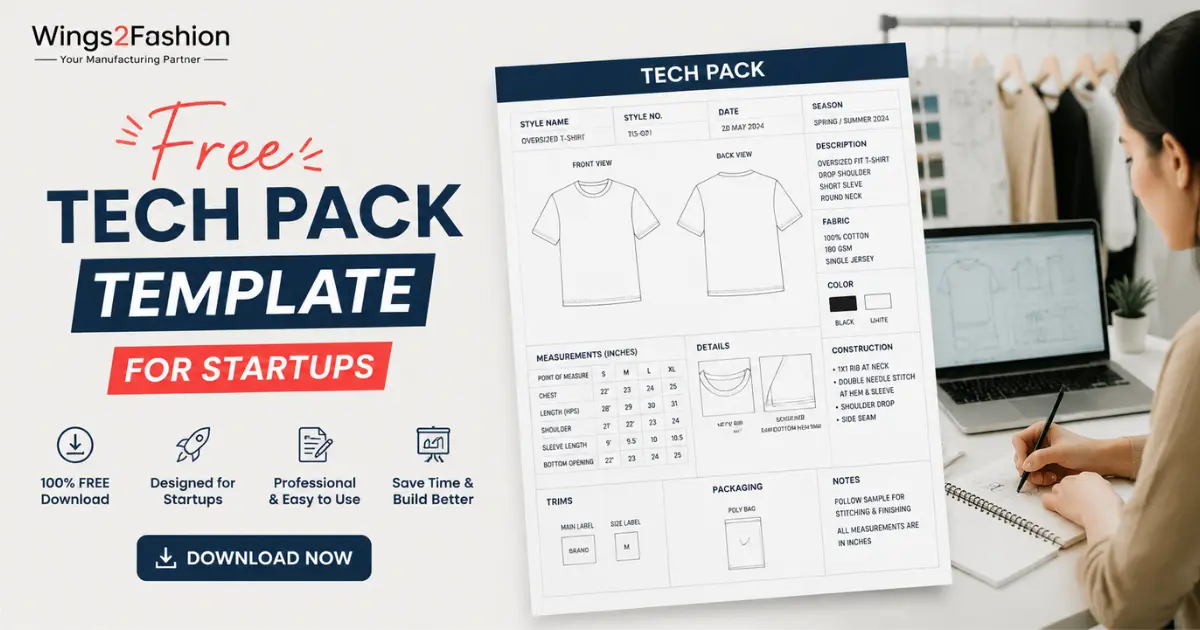 Free Tech Pack Template for Startups
 Cut and Sew vs Private Label Manufacturing
 MOQ in Clothing Manufacturing
 Custom Clothing Manufacturer for UK Brands
 Plus Size Clothing Manufacturing
 Athleisure Manufacturing Trends
 Best Trending Styles Polo T-Shirts for Men
 Top 10 Custom Tracksuit Manufacturers With Low MOQ
 Black Essentials Hoodie Outfit Ideas for Every Season
 2026-09-12
 Suraj Vats





Leave A Comment