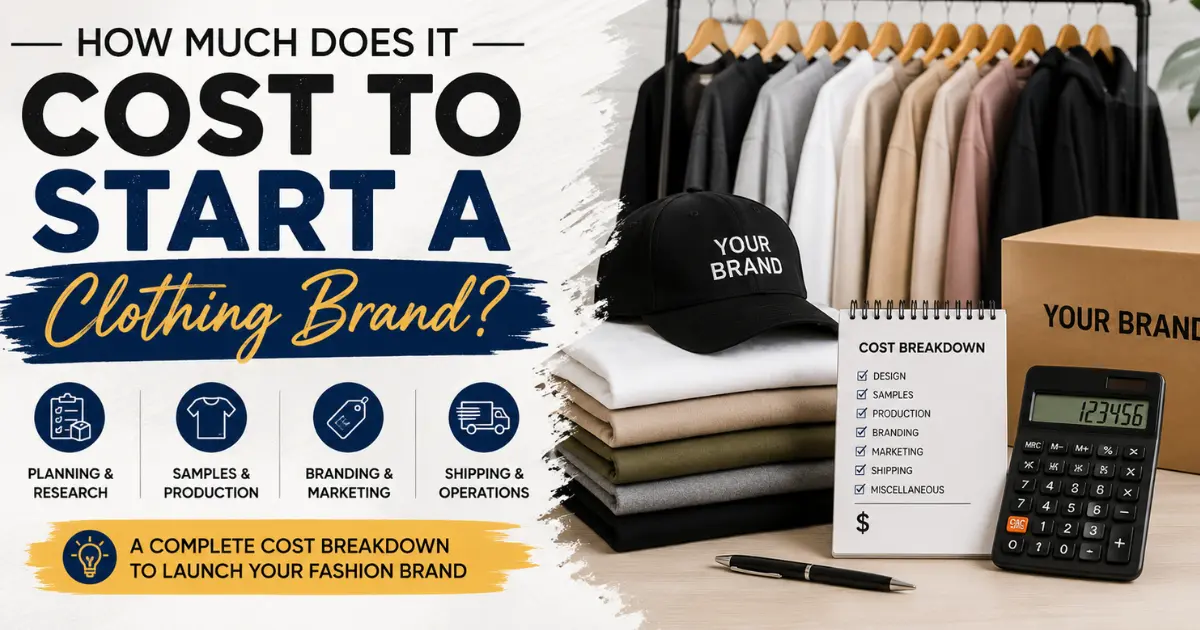
How Much Does It Cost to Start a Clothing Brand?
Everyone asks the same question before they launch: "How much money do I actually need?"
It's a fair question. And it doesn't have one clean answer — because it depends on what kind of brand you're building, how you manufacture, and how lean you're willing to start.
This guide breaks down the real costs involved in starting a clothing brand, category by category, so you can build a budget that actually reflects your plan instead of a guess pulled from a random YouTube video.
There's No Single "Right" Number
You'll see numbers all over the internet. Some say $500. Some say $50,000. Both can be true, depending on what you're doing.
A one-person brand printing on blank tees from a small supplier costs very little to start. A brand developing custom patterns, sourcing premium fabric, and building a full private label identity costs significantly more. Neither approach is wrong. They're just different starting points.
What matters is knowing where your money actually needs to go — and where you can wait.
The Core Cost Categories
Let's break this down into the pieces that make up almost every clothing brand's early budget.
1. Product Design and Development
This is where your idea becomes something a factory can actually produce.
If you're working with a manufacturer who offers design support, this cost can be minimal — sometimes folded into the sampling process. If you're hiring an independent designer or pattern maker, expect to pay anywhere from a few hundred to a few thousand dollars, depending on how many styles you're developing and how complex the construction is.
Simple items — basic tees, hoodies, leggings — cost less to develop. Structured pieces, like tailored jackets or fitted dresses, take more design time and cost more upfront.
2. Sampling
Before any bulk order happens, you need a sample. This step confirms fit, fabric, and construction before you commit real money to production.
Sample costs vary by manufacturer and garment complexity, but expect somewhere between $20 and $150 per sample style, plus shipping if your manufacturer is overseas. Some manufacturers credit part of this cost back once you move into bulk production.
Don't skip this step to save money. A skipped sample stage is how brands end up with a thousand units that don't fit right.
3. Manufacturing and Minimum Order Quantities
This is usually the biggest line item, and the one that varies the most.
MOQs differ wildly between manufacturers. Some demand 500 to 1,000 units per style before they'll even talk to you. Others — like Wings2Fashion — work with startups specifically, offering MOQs starting around 50 to 100 pieces per style. That difference alone can mean the gap between a $1,500 first order and a $15,000 one.
Per-unit cost depends on the garment type, fabric, and decoration involved. A basic cotton tee might run a few dollars per unit at low volume. A more complex piece — outerwear, structured dresses, technical activewear — costs more.
As a rough range: starting with a small batch of basics through a startup-friendly manufacturer can run anywhere from $1,500 to $5,000 for your first production run. Larger or more complex first collections can run well beyond that.
4. Fabric and Trims
If your manufacturer sources fabric on your behalf, this gets folded into your per-unit pricing. If you're sourcing independently, you're paying for fabric, thread, zippers, buttons, elastic, and labels separately — and usually paying minimum order quantities on those too.
Working with a manufacturer who handles sourcing in-house removes a layer of cost and complexity here. It's one less vendor relationship to manage and one less place where pricing surprises can show up.
5. Private Labeling and Branding
Custom labels, woven tags, hang tags, and branded packaging all add a small per-unit cost — but they're what make a garment feel like it belongs to your brand instead of a blank.
Expect somewhere between $0.20 and $1.50 per unit for basic labeling, depending on materials and complexity. It's a small cost relative to everything else, but it's worth budgeting for from day one. Retrofitting branding onto an already-placed order is harder than building it in from the start.
6. Decoration: Printing and Embroidery
Screen printing, digital printing, embroidery — these costs depend heavily on design complexity, placement, and order volume.
Simple one-color screen prints are the cheapest option. Multi-color designs, all-over prints, and embroidery cost more, especially at low volume where setup costs get spread across fewer units. If your manufacturer handles printing and embroidery in-house, you typically get more consistent pricing and quality than outsourcing decoration to a third vendor.
7. Shipping and Import Costs
If you're manufacturing internationally, shipping and customs duties are real costs that catch first-time brand owners off guard.
Air freight is faster but more expensive. Sea freight is cheaper but takes weeks longer. Duties vary by country and product category. Ask your manufacturer directly about export experience and shipping support — a manufacturer who handles this regularly will save you from costly mistakes here.
8. Beyond Manufacturing: Brand and Business Costs
Manufacturing is only part of the picture. You'll also need to budget for:
- Business registration and legal setup — often a few hundred dollars depending on your location
- Branding — logo design, packaging design, photography for your product listings
- Website and e-commerce setup — platforms like Shopify run roughly $30 to $300 a month depending on plan and apps
- Marketing — social content, paid ads, or influencer partnerships, which can range from nearly free to several thousand dollars depending on your strategy
It's easy to focus entirely on manufacturing costs and forget that a brand also needs to actually reach customers.
A Realistic Starting Budget
Putting it all together, here's a rough range for a lean but legitimate first launch:
- Bare minimum, small basics collection: $2,000–$5,000
- Moderate first collection with branding and decoration: $5,000–$12,000
- Larger, more complex first collection: $12,000–$25,000+
These ranges shift based on garment complexity, order size, and how much you handle yourself versus pay others to do.
How to Keep Costs Down Without Cutting Corners
A few practical ways startups reduce risk without sacrificing quality:
- Start with a low MOQ manufacturer. This is the single biggest lever for reducing upfront risk. Wings2Fashion, for example, works with order volumes starting around 50 to 100 units per style — a realistic entry point for a first collection.
- Choose fewer styles, more colorways. Developing five colorways of one well-made tee costs less than developing five entirely different garment types.
- Work with a manufacturer who handles sourcing and decoration in-house. Fewer vendors means fewer markups and fewer places for costs to creep.
- Don't over-invest in packaging before you've validated the product. Branding matters, but it can scale up as revenue does.
Final Thoughts
Starting a clothing brand doesn't have a fixed price. Your investment depends on your product type, order quantity, manufacturing partner, and business goals. The key is to start with a realistic budget and choose a manufacturer that supports your growth.
At Wings2Fashion, we help emerging and established brands with low MOQs, transparent pricing, custom manufacturing, and end-to-end production support. If you're planning to launch a fashion label, explore our guide on Custom Streetwear Manufacturer for Global Brands to learn what to look for in a reliable manufacturing partner.
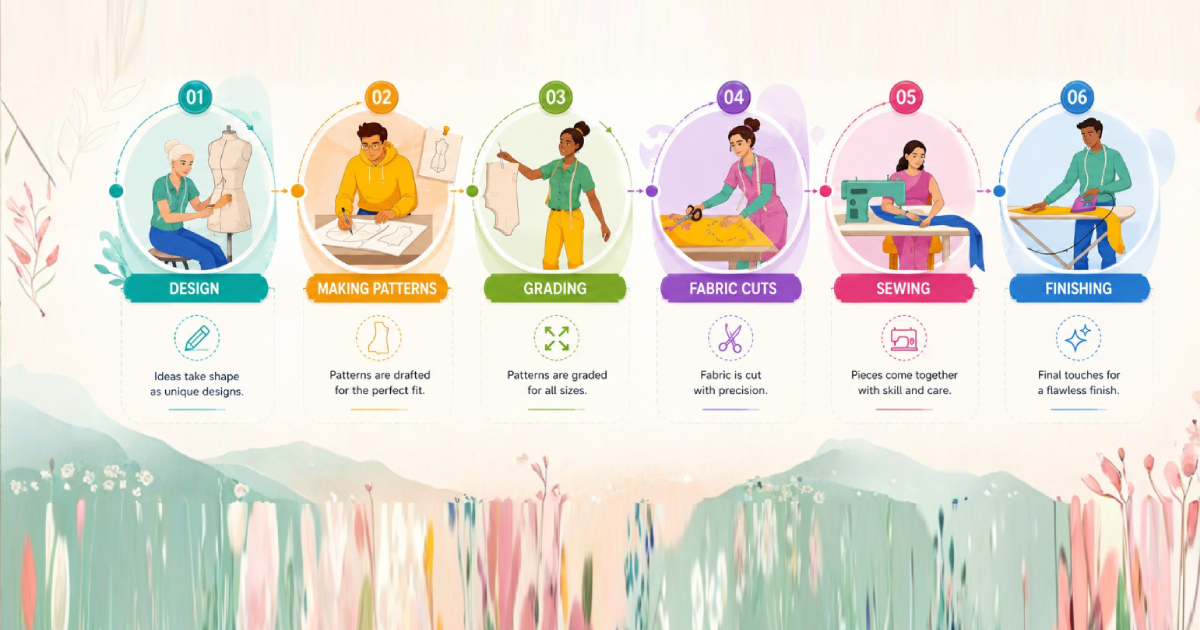
Want to understand how your garments are made from concept to delivery? Read our Step-by-Step Garment Manufacturing Process guide for a complete overview. If you're a new fashion entrepreneur, don't miss our list of the Best Clothing Manufacturers for Startups in USA to find the right production partner for your brand.
Start small, validate your products, and scale with confidence. With the right manufacturing partner and a clear growth strategy, you can build a profitable clothing brand without overspending.
 +919540322227
 info@wings2fashion.com



 Category

 Best Clothing Manufacturers for Startups USA
 Step-by-Step Garment Manufacturing Process
 Custom Streetwear Manufacturer for Global Brands
 Best Garment Manufacturer Australian Brands
 Custom Clothing Production for European Fashion Brands
 Sustainable Hoodie Manufacturer for Startups
 Top 25 Women's Western Wear Trends
 How to Verify a Clothing Manufacturer Before You Pay a Deposit
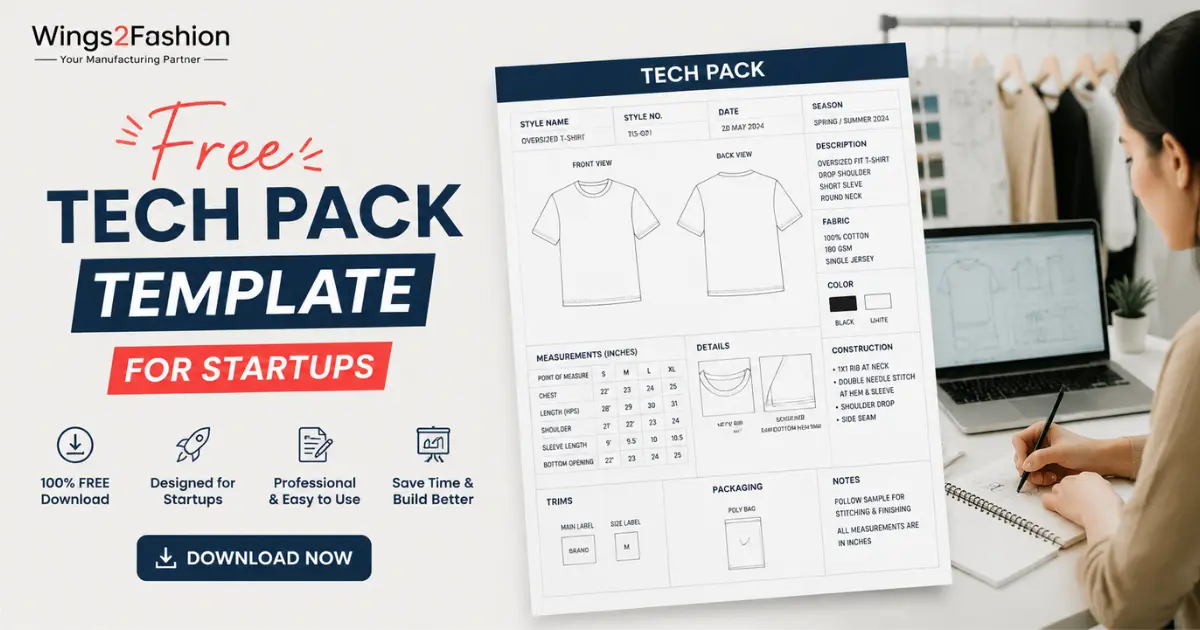 Free Tech Pack Template for Startups
 Cut and Sew vs Private Label Manufacturing
 MOQ in Clothing Manufacturing
 India vs China Clothing Manufacturing
 Custom Clothing Manufacturer for UK Brands
 Plus Size Clothing Manufacturing
 Athleisure Manufacturing Trends
 Best Trending Styles Polo T-Shirts for Men
 Top 10 Custom Tracksuit Manufacturers With Low MOQ
 Black Essentials Hoodie Outfit Ideas for Every Season
 2026-09-12
 Suraj Vats




Leave A Comment