Free Tech Pack Template for Startups: What Wings2Fashion Needs Before Production Begins
Why a Tech Pack Template Decides Whether Your First Sample Matches Your Design
Most founders approach a factory with a Pinterest board, a reference photo, and a rough size guess. The factory builds a sample from that, the sample comes back close but not right, and three weeks disappear into revisions before production even starts. A tech pack template fixes this before it happens.
According to McKinsey, 70 percent of apparel returns are tied to poor fit or style, part of a pattern large enough that the same report puts total US consumer returns at 428 billion dollars in a single year. The gap between what a brand intended and what a factory produced shows up earlier than the return box, during sampling, long before a customer ever sees the garment. A peer-reviewed study in ScienceDirect puts online fashion return rates at 25 to 40 percent overall, climbing to 75 percent for specific categories, and traces the root cause back to specification gaps between design intent and finished product. A tech pack template is how a startup closes that gap before the first sample is even cut.
This guide explains what a tech pack template needs to include, which sections most first-time founders skip, and how Wings2Fashion uses your tech pack to move a design from brief to bulk without the guesswork.
What a Tech Pack Template Actually Is
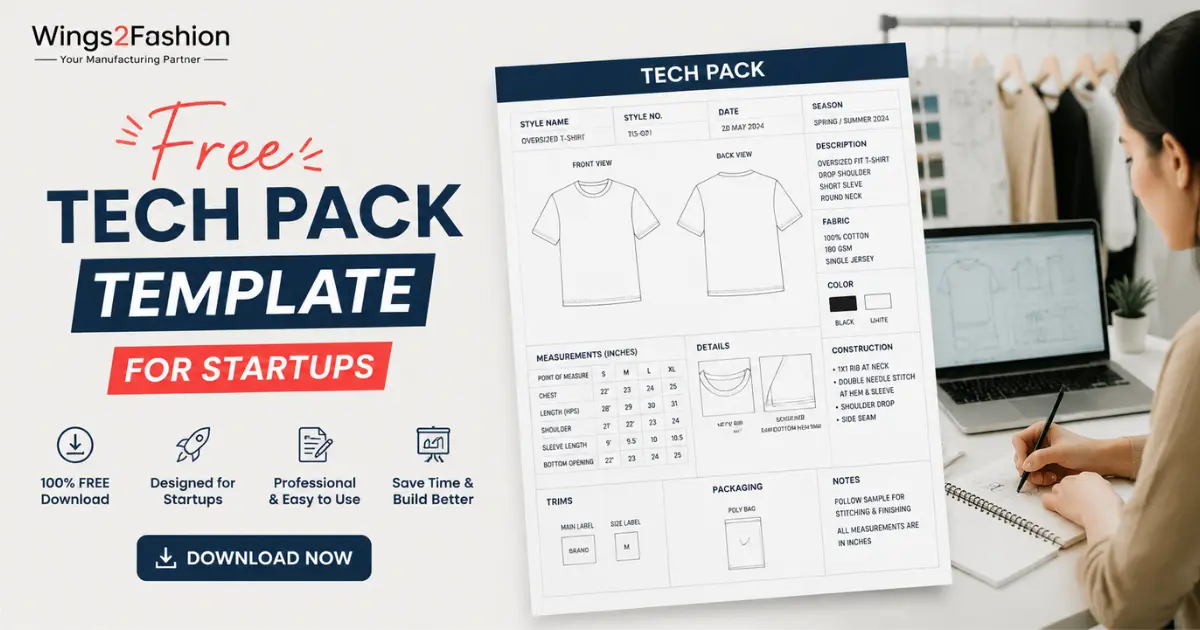
A tech pack template is not a mood board and it is not a single sketch. It is a structured document that tells a factory unfamiliar with your brand exactly how to build your garment on the first attempt. A complete tech pack template turns your design idea into something a pattern maker, a cutter, and a stitching line can all read the same way.
At Wings2Fashion, every order is built against the tech pack and design a client provides, because a clear tech pack template is what keeps a 50-piece first order and a 5,000-piece reorder looking identical.
A tech pack template exists because verbal descriptions and single images leave too much room for interpretation. "Slightly oversized" means a different number of inches to every pattern maker who reads it. A tech pack template removes that ambiguity by replacing adjectives with measurements, fabric codes, and construction diagrams. For most founders, learning how to create a tech pack once is enough. The same structure carries over to every future style.
The Core Sections Every Tech Pack Template Needs
A usable tech pack template has six sections. Skip any one of them and the factory fills the gap with its own assumption, not yours.
Garment Spec Sheet and Points of Measure (POM)
This is the heart of any tech pack template. It lists every measurement point on the garment, such as chest width, shoulder seam, sleeve length, and garment length, along with a tolerance range for each. Without a diagram showing exactly where each measurement is taken, a factory may measure the chest two inches lower than the designer intended and still be technically within spec.
Bill of Materials (BOM)
The BOM section of a tech pack template lists every fabric, trim, and component used in the garment. This includes fabric composition and weight, thread type, zippers, buttons, labels, and packaging materials, each with a supplier reference or code where possible.
Size Grading Rules
A tech pack template built for only one size leaves every other size to guesswork. Grading rules define how each measurement scales up or down across your full size range, so a size Large is a proportional version of your size Medium rather than an approximation.
CAD Sketch or Flat Sketch
A flat, front-and-back technical drawing shows construction lines, seams, and design details without the styling of a photograph. This is the visual anchor the rest of the tech pack template refers back to.
Fabric and Trim Callouts
Beyond the BOM list, callouts point to the exact placement of each fabric panel, trim, and embellishment directly on the flat sketch, so there is no question about where a contrast panel or a logo patch sits.
Construction and Stitch Notes
This section documents seam types, stitch density, and finishing details, such as a French seam on the inside leg or a topstitch width on the hem. These notes matter most on technical categories like activewear and denim, where construction affects fit and durability as much as fabric does.
Tools You Can Use to Create a Tech Pack Without Design Software
You do not need Adobe Illustrator or a design degree to create a tech pack for your clothing brand. Most first-time founders start with one of three approaches:
- Spreadsheet plus flat sketch. A Google Sheet or Excel file for the spec sheet, BOM, and grading table, paired with a hand-drawn or Canva flat sketch. This is the fastest way to create a tech pack for a clothing brand with no prior technical experience.
- Dedicated tech pack software. Platforms such as Techpacker or Adobe Illustrator with a garment template plug-in let you build a more polished tech pack template with built-in measurement diagrams.
- Manufacturer-assisted draft. Some manufacturers, including Wings2Fashion, will take a rough sketch and a reference sample and build out the full spec sheet and grading rules with you during the first consultation.
However you build it, the goal is the same: a single document a factory can produce without needing to guess what you meant. Founders often ask how to create a tech pack that a factory will actually follow exactly, and the honest answer is that the format matters far less than the completeness of the six sections above.
Free Tech Pack Template: What to Fill In Before You Contact a Manufacturer
Before reaching out to any manufacturer, a startup founder can prepare a working tech pack template using this checklist:
- A labeled flat sketch, front and back, of the garment
- A point of measure table listing every measurement and its tolerance
- A graded size chart across your full size range, not just one sample size
- A complete bill of materials with fabric composition and trim details
- Fabric and trim callouts marked directly on the flat sketch
- Construction notes for seams, stitching, and finishing
- A care label and packaging requirement note
A tech pack template does not need professional CAD software to start. Many founders build their first version in a spreadsheet with a hand-drawn or Canva flat sketch attached, and refine it once a manufacturer's technical team reviews it.
Not sure your tech pack template has everything a factory needs? Send it to Wings2Fashion for a free review before you commit to a sample order, and the team will flag any missing measurement, grading gap, or fabric callout before production planning begins.
Common Tech Pack Template Mistakes That Delay Production
Five recurring gaps account for most of the rework startups run into after their first sample comes back.
- Incomplete points of measure. A tech pack template missing a diagram lets the factory choose its own measuring point, which is rarely the one the designer meant.
- No tolerance range. Every measurement needs an acceptable margin of error, or minor production variance becomes a rejected shipment.
- Missing grading rules. A tech pack template specified for one size only forces the factory to interpolate every other size, and interpolation is a design decision the factory should not be making.
- Vague fabric callouts. "Soft cotton blend" is not a fabric code a mill can order against.
- No construction notes. Seam and stitch details left out mean the factory defaults to its standard construction, which may not hold up for your specific garment category.
The cost of catching these gaps early is significant. Research on product design published in arXiv shows that changes made in the early design stage carry a small cost, while the same change made once production has started forces rework and redesign at a much higher cost. A study on standardized technical documentation in apparel product development found that a consistent tech pack template structure directly improves accuracy and consistency between what a brand specifies and what a factory produces. A tech pack template is cheaper to fix on a spreadsheet than on a cutting table.
A common version of this plays out with a first-time hoodie brand: the founder specifies "oversized fit" with no point of measure diagram, the factory builds to its own house block, and the sample comes back two full inches narrower through the chest than the founder pictured. The fix costs a full sample round and two to three weeks. A tech pack template with a labeled POM diagram would have caught this before a single piece of fabric was cut.
Frequently Asked Questions About Building a Tech Pack Template
How do I create a tech pack for a clothing brand with no design background?
Start with a spreadsheet for your spec sheet, BOM, and grading table, and pair it with a simple flat sketch, hand-drawn or built in Canva. You do not need professional software to create a tech pack for a clothing brand that a factory can work from. Refine it once a manufacturer's technical team reviews your first draft.
How to create a tech pack if I only have one sample size figured out?
Build your point of measure table and flat sketch for your base size first, then work with your manufacturer to apply grading rules across the rest of your size range. Knowing how to create a tech pack that covers every size from day one saves a full grading revision later.
Does a tech pack template need to include packaging details?
Yes. Care labels, hang tag placement, and folding or poly-bagging instructions belong in the tech pack template alongside garment measurements, since packaging errors delay shipment the same way construction errors delay sampling.
Can Wings2Fashion help build my tech pack template from scratch?
Yes. Founders who arrive with a sketch and a size guess instead of a finished tech pack template can still start the process. The team will build out the spec sheet, BOM, and grading rules with you during the first consultation.
How Wings2Fashion Uses Your Tech Pack Template During Sampling
Once a tech pack template reaches the production team, the workflow at Wings2Fashion follows a fixed sequence rather than an open-ended back and forth.
The team first reviews the tech pack template against the requested fabric and MOQ, flagging any missing measurement or grading gap before costing begins. A fit sample is then produced, typically within two to three weeks, built directly against the spec sheet and flat sketch rather than a general product description. The founder reviews the sample against the original tech pack template, approves it or requests specific corrections tied to exact measurement points, and production begins only once the sample and the tech pack template match.
This sequence is why a detailed tech pack template shortens the distance between a first conversation and an approved bulk order. A founder who arrives with a complete tech pack template usually needs one sample round. A founder who arrives with a sketch and a size guess usually needs three.
Building Your Tech Pack Template Before You Reach Out
A tech pack template is the single document that determines whether your first sample looks like your design or looks like someone else's interpretation of it. Founders who invest an afternoon learning to create a tech pack for a clothing brand, even a simple spreadsheet version with a flat sketch attached, consistently move through sampling faster and spend less on revision rounds than founders who start with a mood board alone.
Have a design but no tech pack template yet? Get in touch with Wings2Fashion and the team will walk you through what to include for your specific garment category, then quote your first sample once the tech pack template is ready.
 +919540322227
 info@wings2fashion.com



 Category



 Best Clothing Manufacturers for Startups USA
 Step-by-Step Garment Manufacturing Process
 Custom Streetwear Manufacturer for Global Brands
 How Much Does It Cost to Start a Clothing Brand?
 Best Garment Manufacturer Australian Brands
 Custom Clothing Production for European Fashion Brands
 Sustainable Hoodie Manufacturer for Startups
 Top 25 Women's Western Wear Trends
 How to Verify a Clothing Manufacturer Before You Pay a Deposit
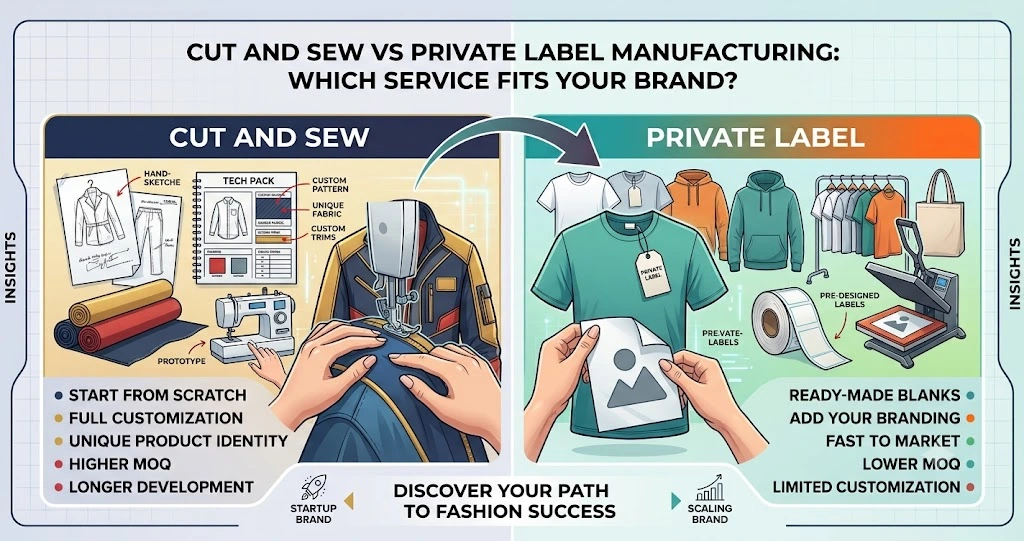 Cut and Sew vs Private Label Manufacturing
 MOQ in Clothing Manufacturing
 India vs China Clothing Manufacturing
 Custom Clothing Manufacturer for UK Brands
 Plus Size Clothing Manufacturing
 Athleisure Manufacturing Trends
 Best Trending Styles Polo T-Shirts for Men
 Top 10 Custom Tracksuit Manufacturers With Low MOQ
 Black Essentials Hoodie Outfit Ideas for Every Season
 Custom Jogger Manufacturing Tech Pack Bulk Production
 2026-10-13
 Suraj Vats





Leave A Comment