Pull on a pair of leggings and you’ll feel it immediately. That second-skin fit that moves with you, stretches when you need it to, and snaps back without going baggy at the knees by lunchtime. That’s spandex fabric doing its job. It’s one of those materials that most people wear every single day without thinking much about what it actually is or why it behaves the way it does.
This is everything worth knowing about spandex fabric, written for someone who wears it rather than someone who studies it.
So What Actually is Spandex Fabric?
Spandex fabric is a synthetic fibre, which means it comes from chemical compounds rather than from plants or animals the way cotton or wool does. The technical name for the polymer it’s made from is polyether-polyurea copolymer, which tells you very little unless you have a chemistry background. The more useful thing to know is that the name spandex is an anagram of the word expands, which is a pretty honest description of what the fibre does.
In North America everyone calls it spandex. In Europe the same material goes by elastane. Lycra is a brand name for a specific version of it, but the word has become so common that most people use it to mean any stretchy synthetic fibre. All three are pointing at the same thing.
What makes spandex fabric genuinely remarkable is the degree to which it stretches and the reliability with which it comes back. We’re talking about a fibre that can stretch to five or eight times its natural length and return to its original shape without distorting. Nothing natural does that. Cotton stretches a little and stays stretched. Wool has some give but loses it over time. Spandex just keeps bouncing back.
In most garments you own, the spandex content is relatively small. Somewhere between two and twenty percent of the total fabric, with the rest being cotton, polyester, nylon, or whatever the primary fibre is. That small percentage is doing a disproportionate amount of work every time you sit down, bend over, or move in any direction the fabric needs to accommodate.
Spandex Fabric Properties That Actually Matter
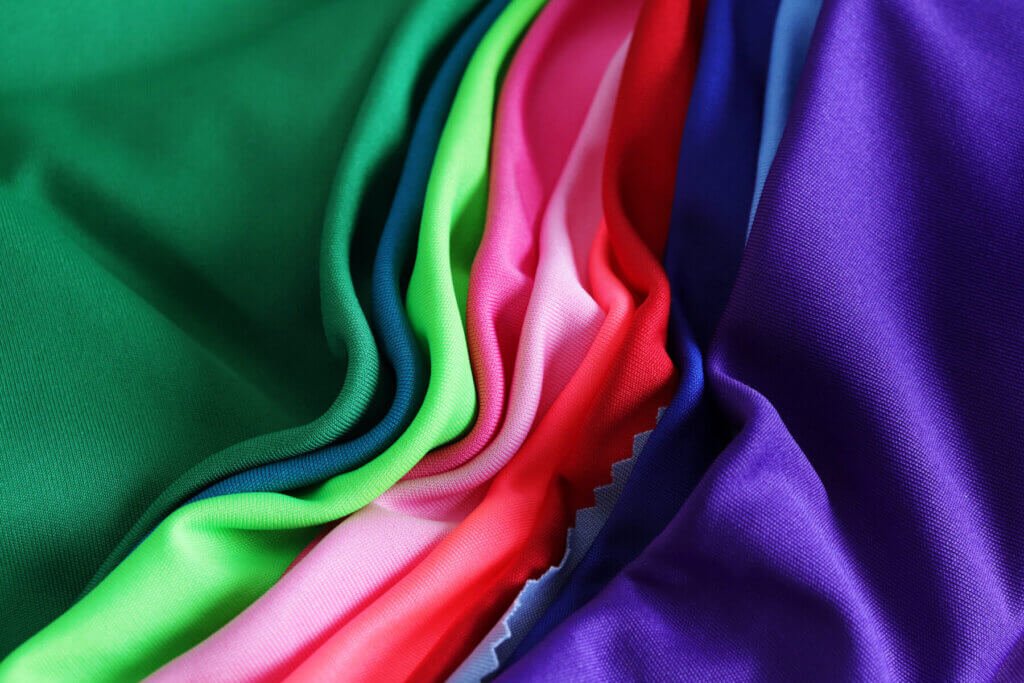
There are a few spandex fabric properties that explain why it ended up in so much of the clothing we wear.
The stretch and recovery combination is the obvious one. But the reason it matters beyond leggings and swimwear is that it allows clothing designers to make fitted garments that don’t restrict movement. Before spandex, form-fitting clothing either restricted the wearer or wore out quickly. The fibre solved both problems at once.
It’s also lightweight. Adding spandex to a fabric blend doesn’t make the fabric noticeably heavier, which matters in activewear where you want the fabric to feel like it’s barely there.
It dries quickly because it doesn’t absorb water the way natural fibres do. This is why swimwear and sportswear made with spandex blends dry faster than their purely natural fibre equivalents, and why you’re not still sitting in a wet swimsuit three hours after leaving the pool.
The durability is underrated as a spandex fabric property. A good spandex blend garment holds its stretch and shape through hundreds of washes in a way that cheaper elastic alternatives simply don’t. The waistband that goes loose after six months of washing is usually not a spandex issue. It’s a construction issue.
The Different Types of Spandex Fabric and Where They Show Up
The types of spandex fabric you encounter depend on what the spandex is blended with, and each combination has a fairly distinct personality.
Cotton Spandex is what most people encounter first. The cotton gives you the soft, breathable feel you associate with comfortable everyday clothing. The spandex gives the fabric enough give to move with you rather than against you. It shows up in everyday t-shirts, casual trousers, and the kind of basics you reach for without thinking.
Nylon Spandex is stronger and has a slightly smoother, more technical feel. It’s the standard combination for swimwear and dancewear because nylon handles chlorine and saltwater better than most fibres, and the spandex provides the stretch that both those categories need. If you’ve ever worn a swimsuit that kept its shape through an entire summer, nylon spandex is almost certainly why.
Polyester Spandex is the performance combination. Polyester already has good moisture-wicking properties and holds its shape well. Add spandex and you get a fabric that handles intense physical activity, recovers between sessions, and maintains its structure across a long season of use. Most serious activewear is built on this blend.
Rayon Spandex is the softer, more relaxed version. Rayon has a natural drape and a fluid movement that makes clothing feel comfortable and effortless. Blend it with spandex and you get casual wear and loungewear that moves well and feels good against skin without the more technical feel of the performance blends.
The Environmental Reality
It’s worth being honest about this part. Spandex fabric is made from petroleum-derived chemicals, which puts it squarely in the category of materials that carry an environmental cost. The raw materials come from fossil fuel extraction. The production process is energy-intensive. The finished fibre is non-biodegradable, meaning garments containing spandex don’t break down after disposal.
There’s also the microplastic issue. Synthetic fibres including spandex shed microscopic plastic particles every time they’re washed. Those particles end up in waterways and accumulate in ecosystems in ways that researchers are still working to fully understand.
This doesn’t mean avoiding spandex fabric entirely is a practical or even necessary position. It does mean that brands and consumers who care about sustainability are right to factor the environmental profile of synthetic fibres into their material choices, and to pay attention to developments in recycled spandex and improved washing technology that are slowly changing the calculation.
The Short Version
Spandex fabric is a synthetic fibre that stretches dramatically and recovers reliably. It shows up in most fitted clothing as a small percentage of a larger blend, doing the job of keeping garments comfortable and functional across repeated wear and washing. The types of spandex fabric vary based on what it’s blended with, each combination suited to different end uses from everyday basics to high-performance sportswear. The spandex fabric properties that make it useful are also the reason it carries environmental implications worth understanding.
It’s not a perfect material. But it’s a genuinely useful one, and understanding it properly makes you a more informed buyer, whether you’re purchasing clothing for yourself or sourcing fabric for production.