Most fashion brands don’t make their own clothes. They never have.
Behind nearly every successful label — from boutique streetwear to mid-market women’s wear — is a private label manufacturer doing the actual production. The brand handles the vision, the marketing, the customer. The manufacturer handles the fabric, the stitching, the construction.
If you’re building a fashion brand, understanding how private label manufacturing works isn’t optional. It’s the foundation everything else gets built on.
This guide covers what private label clothing manufacturing actually means, how to find the right partner, what to watch out for, and what separates brands that scale from brands that stall.
What Is Private Label Clothing Manufacturing?
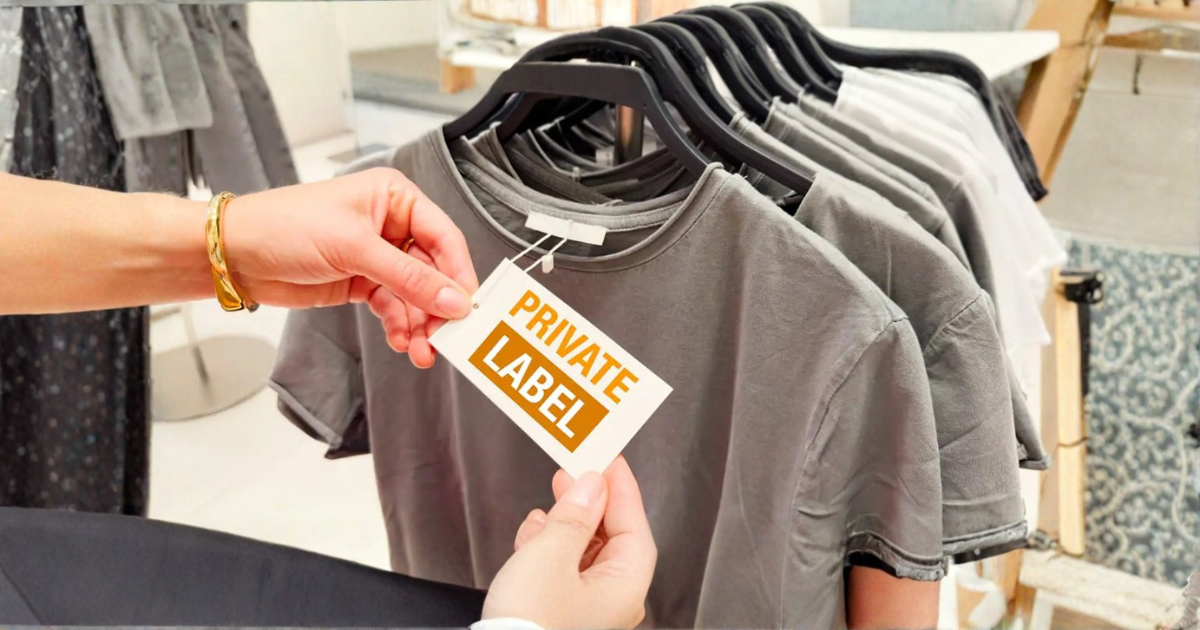
Private label means a manufacturer produces garments that you sell under your own brand name. You own the label. You control the design, the packaging, and how it’s positioned in the market.
The factory? Invisible to your customer.
This is different from buying wholesale (purchasing finished, branded goods from another company) and different from white label (buying a generic product with minimal customization). Private label gives you real control over the product — fabric choice, fit, colorways, construction details, labels, tags, and packaging.
For fashion brands, that control is everything. Your product is your brand. If the fit is off or the fabric feels cheap, no amount of marketing saves you.
Why Fashion Brands Choose Private Label
The business case is straightforward.
Margins. When you own the product design and manufacture at cost, your margins are significantly better than reselling someone else’s branded goods.
Brand identity. You’re not selling a commodity. You’re selling your product — with your sizing, your aesthetic, your label inside the collar.
Exclusivity. A competing brand can’t stock the same item. Your private label product is yours alone.
Scalability. Once you’ve nailed a product and built a supplier relationship, scaling production is much easier than starting from scratch each time.
The tradeoff? More upfront investment. More decisions. More things that can go wrong if you don’t have the right manufacturer.
Types of Private Label Clothing Manufacturers
Not all manufacturers work the same way. Before you start reaching out, understand the main categories.
Full-Package Manufacturers (FPP)
Full-package manufacturers handle everything. Fabric sourcing, pattern making, sampling, production, sometimes even packaging. You provide the concept and design direction — they do the rest.
This is the best option for brands that don’t have an in-house production team or deep technical knowledge. You’re paying for their expertise, not just their machines.
Cut, Make, Trim (CMT)
CMT factories only cut, sew, and finish. You supply the fabric, trims, and a complete tech pack. They assemble.
This model gives you more control over materials but requires more work on your end. It suits brands with experienced designers and sourcing teams.
Domestic vs. Overseas Manufacturers
Both have real advantages depending on your stage and goals.
Domestic (US-based):
- Faster lead times (4–8 weeks vs. 12–20 weeks)
- Lower MOQs — often as low as 50–100 units
- Easier communication
- “Made in USA” positioning for your brand
- Higher per-unit cost
Overseas (China, Bangladesh, Turkey, Portugal, etc.):
- Lower per-unit cost at scale
- Larger production capacity
- Wide range of specializations
- Longer lead times and more complex logistics
- Higher MOQs, typically 300–500+ units per style
For early-stage brands, domestic often makes more sense. For brands ready to scale with proven products, overseas production becomes more attractive.
How to Find the Right Private Label Clothing Manufacturer
This is where most founders lose weeks — or make costly mistakes. Here’s a practical framework.
Step 1: Know Your Product Category
Manufacturers specialize. A factory that excels at denim construction may struggle with technical activewear. One that’s great at woven shirts may not handle jersey knits well.
Before you reach out to anyone, know exactly what you’re making. Category, fabric type, construction complexity, expected price point.
Step 2: Define Your MOQ Reality
Be honest. If you’re pre-launch with no sales history, don’t approach factories that require 500-unit minimums. You’ll overstock, tie up cash, and panic.
Find manufacturers whose minimums match your actual stage. There are good ones that work with 50–150 unit runs. They exist. Seek them out specifically.
Step 3: Use the Right Search Channels
Maker’s Row — A curated platform of US-based apparel manufacturers. Searchable by category, location, and MOQ.
Sewport — Connects brands with manufacturers globally. Good for finding international options with portfolio vetting.
Trade shows — MAGIC Las Vegas, Texworld USA, and Première Vision are all places where manufacturers actively look for brand partners.
Industry referrals — Ask other founders. The fashion startup community is more generous with manufacturer recommendations than most people expect. A name passed along by someone who’s actually worked with a factory is worth 10 cold Google searches.
Step 4: Request Samples Before Committing
Never skip this. A sample tells you more about a manufacturer than any sales pitch or capability deck.
Look at stitching consistency, seam finishing, fabric hand-feel, label placement, and overall construction quality. Put the garment through a wash cycle. Stress-test the seams.
If the sample is late, communication during the sample process is poor, or the quality misses the mark — that’s production, showing you who it is early.
Step 5: Visit If You Can
Not always possible, especially with overseas factories. But if you’re committing to a meaningful production run, getting on a plane or driving to the facility is worth it.
You’ll see the actual working conditions, meet the people, understand the scale of the operation, and get a much clearer read on whether this is a real long-term partnership or just a transaction.
What to Include When Approaching a Manufacturer
Factories get cold outreach constantly. Most of it is vague. “I want to start a clothing brand” is not a brief.
Come prepared with:
- A clear product description — what you’re making, in what fabrics, for what end customer
- Design references or sketches — mood boards, inspiration images, anything that communicates your aesthetic
- A tech pack (if you have one) — the more detailed, the better
- Your target MOQ and timeline — realistic, not aspirational
- Your budget range — some manufacturers won’t discuss pricing until they understand volume
The more specific you are, the more seriously you’ll be taken. Manufacturers want brand partners who are organized and ready — not ideas that are still halfway in someone’s head.
Red Flags to Watch For
Experience teaches you these the hard way. Save yourself the lesson.
No sample policy. Any legitimate manufacturer will provide samples before production. If they resist or charge outrageous sample fees, walk away.
Vague timelines. “About 8–10 weeks, maybe” isn’t good enough. Get production timelines in writing. Specific dates, not ranges.
Pressure to commit quickly. Good manufacturers don’t rush you into contracts. If they’re pushing hard for a fast decision, ask yourself why.
Poor communication early. If emails go unanswered for three days during the sales process, imagine what happens once your deposit is paid.
No references. Ask for two or three brand references. Then actually call them. Ask directly: would you work with this manufacturer again? Why or why not?
Building a Real Partnership, Not Just a Transaction
The best brand-manufacturer relationships are long-term. As you grow, they grow. They learn your standards. You learn their process. Production gets faster, smoother, and better.
That doesn’t happen when you chase the cheapest quote every season. It happens when you treat your manufacturer like a real business partner — communicate clearly, pay on time, give honest feedback, and grow together.
Some of the strongest fashion brands in the market today have worked with the same manufacturer for years. That continuity shows in the product. Customers can feel it, even if they can’t explain why.
Questions to Ask Any Potential Manufacturer
Use these when you’re vetting options:
- What’s your MOQ per style? Per colorway?
- What’s your typical sample-to-production timeline?
- Do you handle fabric sourcing, or is that on me?
- What quality control steps happen before shipment?
- Have you worked with brands at my stage before?
- Can I visit the facility?
- Who is my main point of contact during production?
The answers matter. So does how they answer — confidence, clarity, and willingness to be transparent are all signals.
Final Thoughts
Finding the right private label clothing manufacturer takes time. It’s one of the most important decisions you’ll make as a fashion brand — and one of the most underdiscussed.
The right partner doesn’t just make your product. They help you build it better. They catch spec errors before production runs. They flag fabric issues before you’ve committed to a colorway. They’re invested in your success because your success means more orders.
That’s the relationship worth finding.
Start with samples. Ask hard questions. Check references. And when you find a manufacturer who communicates well, hits timelines, and delivers quality — hold onto them.
That partnership is worth more than any single production run.